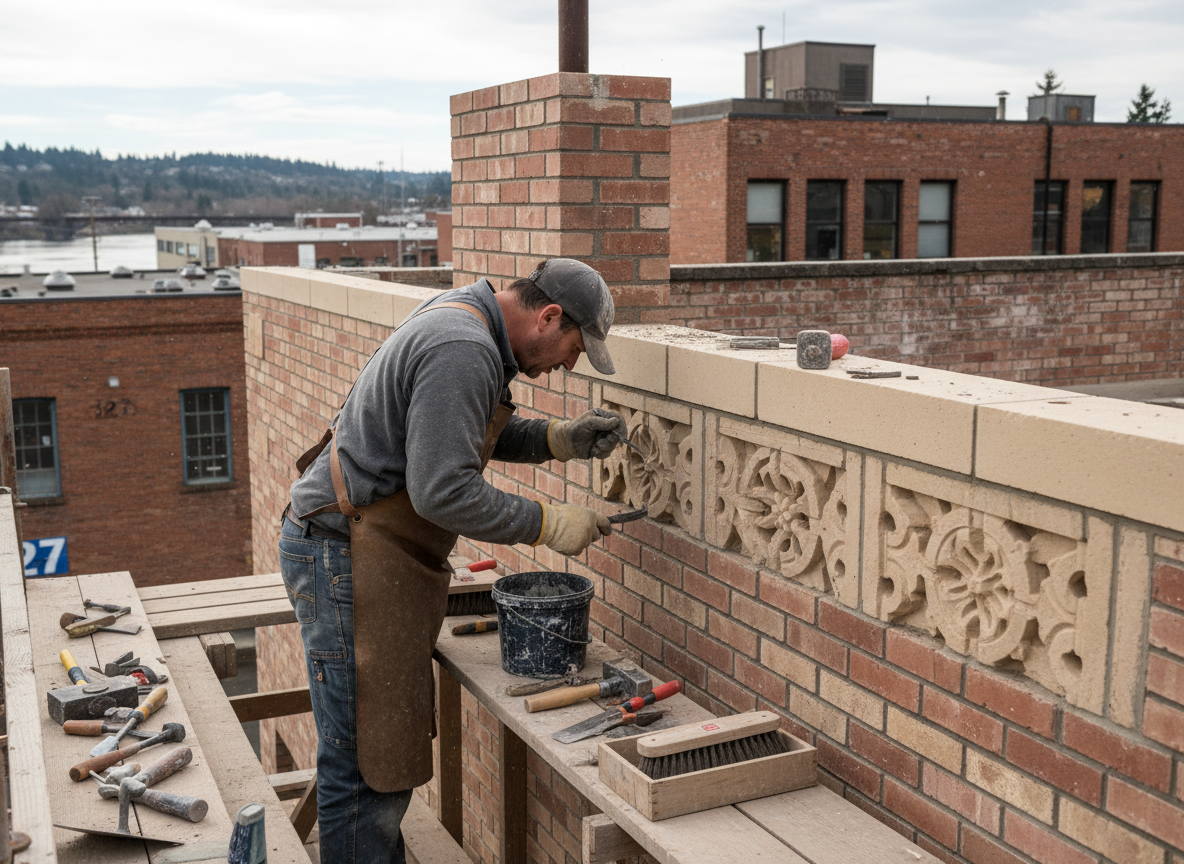
Decorative masonry in Milwaukie requires careful material selection because mild wet winters drive moisture into mortar joints while warm dry summers cause expansion and contraction cycles. Homes in neighborhoods such as Ardenwald and Island Station often feature older foundations near the Willamette River where soil movement and occasional flooding demand flexible mortar mixes and proper weep holes to prevent spalling. Stone veneers and brick accents must be anchored to resist the freeze-thaw cycles that occur even in this moderate climate, especially on north-facing walls that stay damp longer.
Working around the Willamette River and Milwaukie Riverfront Park means crews frequently encounter variable soil conditions that shift load-bearing requirements for retaining walls or outdoor fireplaces. In Downtown Milwaukie and Hector Campbell, many residences sit on lots with slopes toward the river, so drainage integration becomes critical during veneer installation to avoid water pooling behind the masonry. Local code in Clackamas County requires specific flashing details at rooflines and window heads that differ from Portland projects just across the river.
Edge cases include matching existing historic brickwork on older stock in Ardenwald where color and texture variations are pronounced, or installing cast-stone elements that must withstand the constant salt air influence from Portland's industrial corridor. Proper surface prep on concrete block or wood-framed walls prevents future cracking when the ground settles after heavy winter rains. Homeowners should expect that decorative elements added near the river need extra expansion joints to handle the seasonal moisture swings unique to this stretch of Clackamas County.
Technician insight
In Milwaukie, the thing that catches most people out with decorative masonry is how quickly wet winters push moisture behind veneer on older Ardenwald foundations if weep holes and flashing are skipped. The river soil here shifts more than Portland lots just north, so skipping extra expansion joints in summer-installed work leads to cracking by the next wet season.
Ardenwald Veneer Repair
Water had migrated behind failing brick accents on a 1960s home near the river, causing mortar washout after repeated winter rains. We found inadequate flashing at the foundation line typical of that neighborhood. We removed the damaged sections, added proper drainage and new stone veneer anchored for soil movement, and restored the appearance while improving long-term resistance to Clackamas County moisture.
How it works
- 1
Site Assessment
Evaluate existing masonry, soil conditions, and drainage near the Willamette River or in Ardenwald lots.
- 2
Material Selection
Choose stone or brick suited to Milwaukie's wet winters and dry summers with compatible mortar.
- 3
Design and Layout
Mark patterns and flashing locations to meet Clackamas County requirements for river-adjacent homes.
- 4
Installation
Set veneer or accents with proper anchors and weep systems, then tool joints for weather resistance.
- 5
Final Inspection
Check drainage, expansion joints, and appearance before sign-off.
Pricing
Upfront quotes based on material choice, site access, and scope; we inspect work in person before any numbers are discussed.