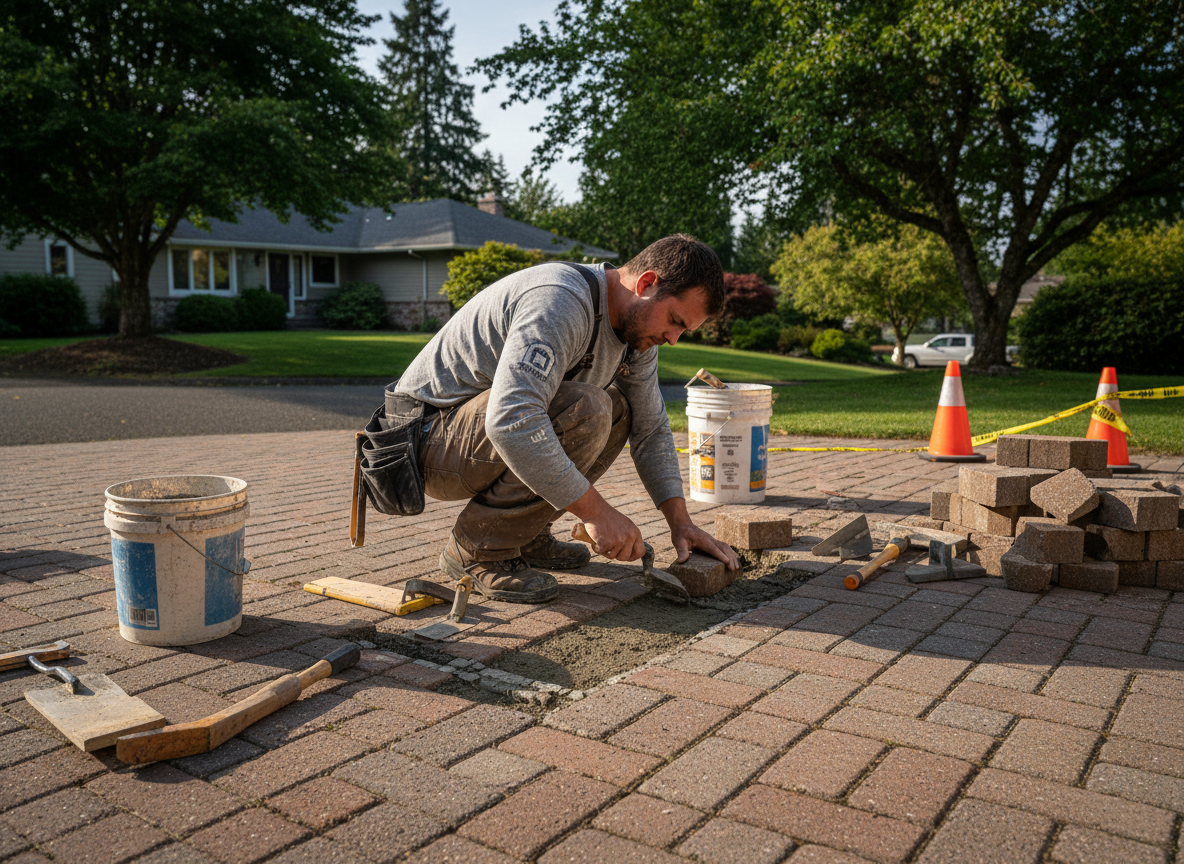
Milwaukie driveways built on the clay soils common in Clackamas County often settle unevenly after repeated wet winters. Water from the Willamette River watershed seeps under pavers or brick edges, washing out base material and creating low spots that pool near the garage apron. In neighborhoods such as Ardenwald and Hector Campbell, many driveways date to the 1960s and 1970s when thinner mortar beds were standard; these fail faster once the surrounding grade shifts. Proper repair requires removing loose masonry, re-establishing a compacted gravel base with adequate slope away from foundations, and matching the original unit masonry so the patch does not telegraph future movement.
Warm dry summers allow crews to work without rain delays, but they also highlight any remaining drainage flaws once the surface is restored. Homeowners in Downtown Milwaukie frequently request color-matched mortar or salvaged brick to keep historic character intact while meeting current Clackamas County setback and impervious-surface rules. Edge cases include driveways that slope toward the house because of later sidewalk raises along Oak Street; these require French-drain integration or re-grading before new masonry is laid. Skipping base stabilization almost always leads to repeat cracking within two seasons.
Portland-area suppliers stock the regional sand and aggregate that match older Milwaukie mixes, avoiding the color mismatch that occurs with big-box materials. Crews inspect for underground utilities before excavation because many Island Station properties still have original clay sewer laterals running under driveways. When the existing masonry is concrete pavers rather than brick, the repair sequence changes to include polymeric sand joints that resist the fine silt carried by winter runoff. These details separate a lasting fix from a cosmetic patch that fails after the next prolonged rain event.
Technician insight
In Milwaukie, the thing that catches most people out with masonry driveway repair is the clay soils along the Willamette that stay saturated through mild wet winters; homeowners patch the surface cracks but never fix the shifting base, so the same low spots return every spring in places like Ardenwald.
Settled Driveway in Island Station
Homeowner reported standing water near the garage after winter rains. We found the original base had washed out beneath 1970s brick pavers. We excavated the low section, added compacted gravel to restore slope, and relaid matching brick with new joints. The driveway now drains cleanly toward the street without pooling.
How it works
- 1
Site Assessment
Walk the full driveway length, note low spots, joint failure, and drainage direction relative to the house and street in Milwaukie.
- 2
Base Preparation
Excavate failed sections, add and compact new gravel to restore proper slope away from foundations before any masonry is reset.
- 3
Masonry Replacement
Relay or replace units with matching material, install polymeric or traditional sand joints, and tool mortar to shed water.
- 4
Final Grading and Cleanup
Verify positive drainage, backfill edges, and remove debris so the driveway is ready for immediate use.
Pricing
Pricing varies with driveway length, depth of base repair needed, and whether salvaged or new masonry is used; site visit required for accurate scope.