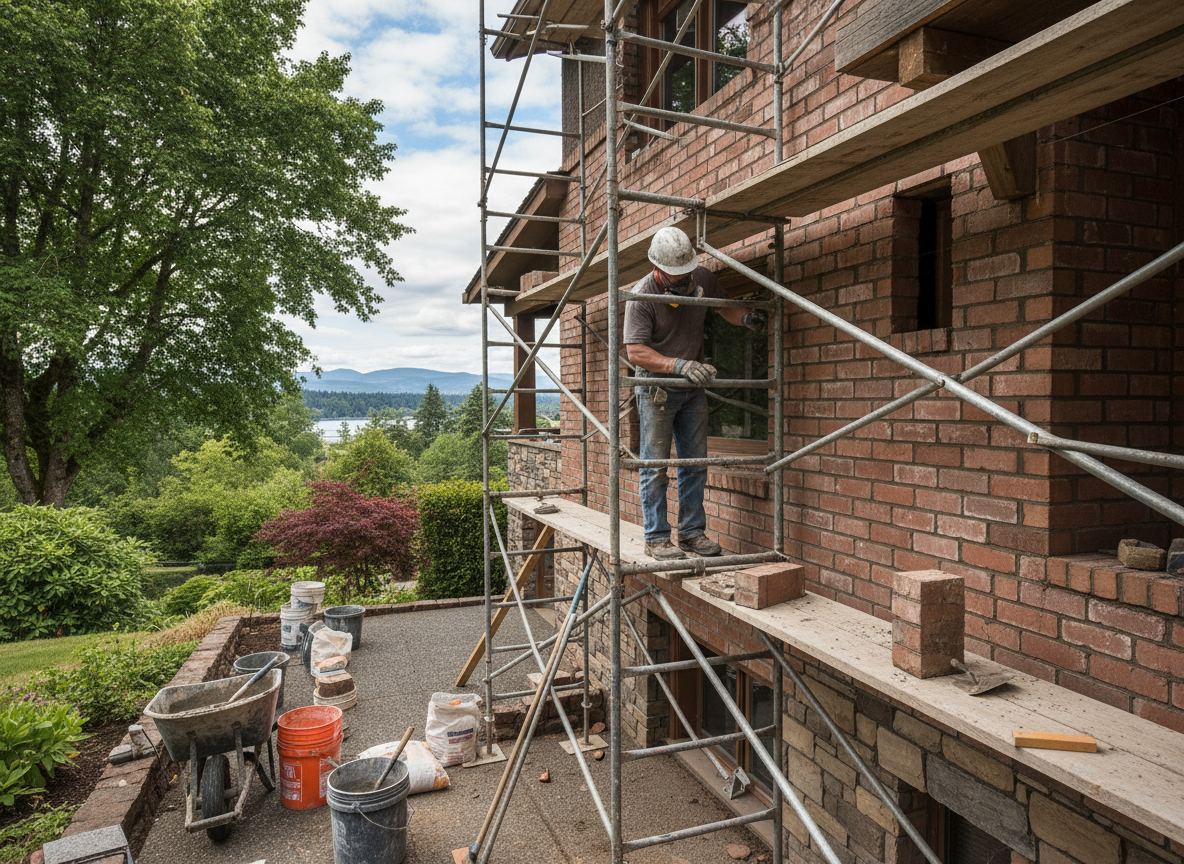
Milwaukie homes in neighborhoods like Ardenwald and Hector Campbell often feature original brick foundations or chimneys from the mid-20th century that face constant moisture from the Willamette River and mild wet winters. Residential masonry services here start with assessing how prolonged rain saturates mortar joints and how warm dry summers then cause expansion cracks. Proper tuckpointing with lime-based mixes matched to the original clay brick prevents water intrusion that leads to interior damage during Clackamas County winters.
Terrain along the riverfront and in Island Station creates drainage challenges where soil shifts against retaining walls and patios. A masonry contractor must account for these conditions by installing proper weep holes and using Type S mortar in high-exposure areas. Work in Downtown Milwaukie frequently involves matching existing stone veneers on older homes while meeting current Clackamas County building requirements for seismic ties on taller structures.
Homeowners in Portland-adjacent Milwaukie commonly request chimney rebuilds or porch repairs where freeze-thaw cycles from occasional cold snaps have spalled brick faces. Residential masonry services include full removal of deteriorated material down to sound substrate before rebuilding with through-wall flashing. This approach avoids repeated failures that occur when only surface repairs are attempted on homes exposed to the area's consistent winter dampness.
Technician insight
In Milwaukie, the thing that catches most people out with residential masonry services is ignoring how the mild wet winters keep mortar saturated for months in Ardenwald homes, then warm dry summers open cracks that let water reach the interior framing. Homeowners often try surface patching instead of full joint removal, which fails quickly once the river-influenced humidity returns.
Chimney Crown Failure in Island Station
A homeowner noticed water stains inside an upper room after several weeks of steady rain. Inspection revealed the original crown had cracked and allowed moisture to travel down the flue. We removed the failed crown, installed new through-wall flashing, and rebuilt it with a slope designed for Milwaukie's winter conditions. The interior staining stopped and no further water entered during the following wet season.
How it works
- 1
Site Assessment
Walk the property in the specific neighborhood to inspect existing masonry, note drainage patterns, and check for water exposure from the Willamette River or local topography.
- 2
Material Matching
Select brick, stone, or block and mortar formulation that aligns with the age and style of the home in areas like Ardenwald or Downtown Milwaukie.
- 3
Preparation and Repair
Remove damaged sections, install any required flashing or ties, and rebuild to handle Clackamas County soil movement and seasonal moisture.
- 4
Final Inspection and Cleanup
Verify structural integrity, ensure proper curing during dry summer windows or protected winter work, and leave the site clean.
Pricing
Upfront quotes provided after site visit; final cost depends on material access, extent of deterioration, and weather windows.