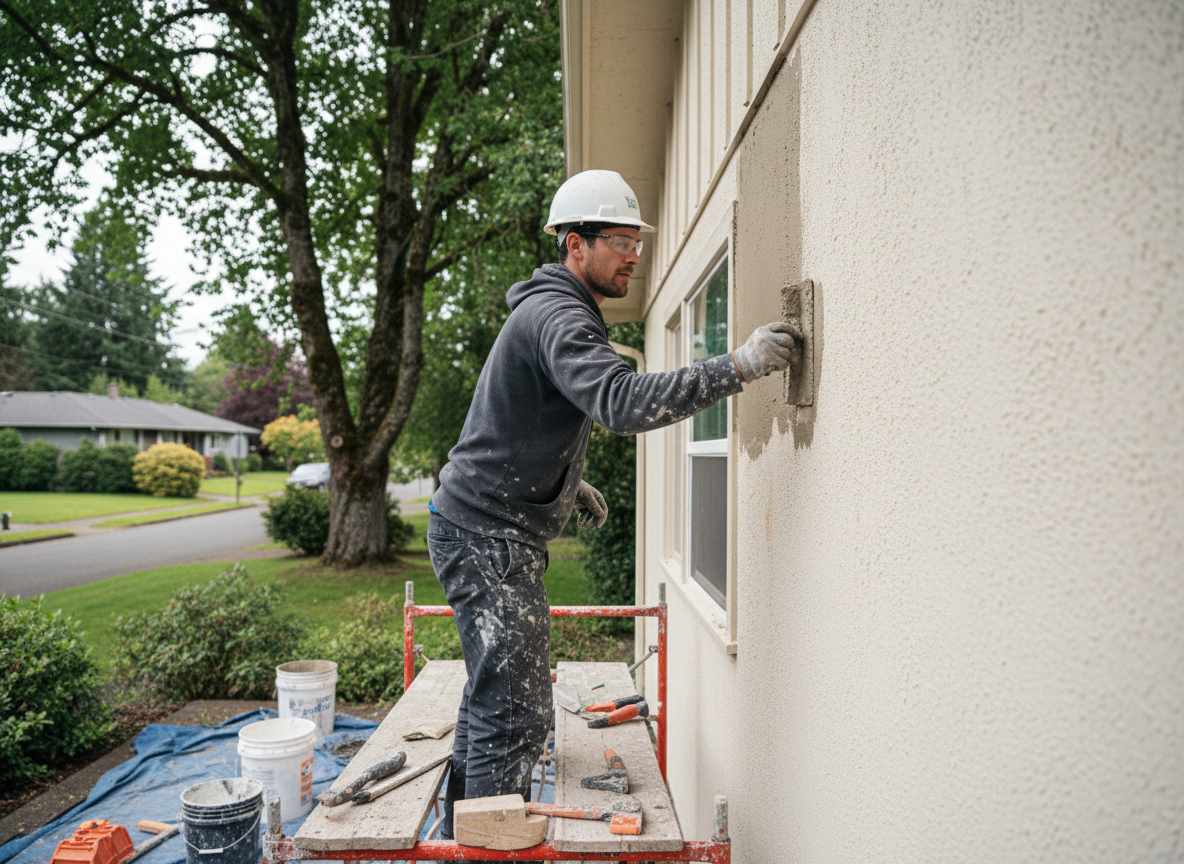
Stucco on homes in Downtown Milwaukie and Hector Campbell often dates to mid-century builds where the original three-coat system meets wood lath or early wire mesh. Wet winters drive water behind hairline cracks near window returns and at grade, especially on slopes facing the Willamette River. We cut out failed sections, install new weep screed where missing, and match the original sand finish rather than slapping on a thin patch that traps moisture.
In Ardenwald and Island Station the soil stays saturated through spring, so any repair without proper flashing at roof-wall intersections or chimney bases will fail again within two seasons. We remove delaminated stucco down to sound substrate, treat rusted lath, and install control joints to accommodate the expansion that occurs during warm dry summers. Skipping the metal lath replacement or using the wrong mix ratio invites the same spalling we see on Portland-side properties that cross the river.
Clackamas County inspectors flag stucco work that covers existing weep holes or alters drainage on older homes. We photograph every layer removed and keep the repair depth consistent so the new stucco bonds without cold joints. Homeowners who paint over cracks instead of addressing the substrate watch the finish bubble again the first heavy rain.
Weather and Substrate Realities
Mild wet winters keep stucco saturated for months while warm dry summers create rapid surface drying that widens existing cracks. Homes near the Willamette River sit on heavier clay soils that hold water against foundations, pushing moisture upward into the stucco. Proper repair requires removing material well beyond the visible damage to reach dry substrate and installing new flashing that ties into the existing drainage plane.
Technician insight
In Milwaukie the thing that catches most people out with stucco repair contractors is assuming surface cracks are cosmetic. Once you open the wall on a 1950s Ardenwald house you usually find the paper and lath rotted from years of wind-driven rain off the Willamette, and the fix requires pulling far more material than the homeowner expected.
Hidden Damage Behind South Wall
A homeowner in Island Station noticed staining along the base of the stucco after a wet winter. We opened the wall and found saturated felt and rusted lath extending three feet above grade where the original flashing had corroded. We removed the damaged section, installed new metal lath and weep screed, then tied the repair into the existing drainage plane. The finish now matches the rest of the house and has stayed dry through the following season.
How it works
- 1
Site Assessment
We examine every elevation for cracks, delamination, and staining while noting roof overhangs and grade conditions typical in Milwaukie neighborhoods.
- 2
Moisture Mapping
Using probes we locate hidden water behind the stucco without guessing, focusing on areas where winter rain pools against south and west walls.
- 3
Targeted Removal
Failed stucco is cut back to sound material, rusted lath replaced, and new weep screed installed where original details are missing.
- 4
Finish and Cure
Three-coat application matches the existing texture, followed by controlled curing during the dry summer window to prevent shrinkage cracks.
- 5
Final Walkthrough
We review drainage paths and provide the homeowner with photos showing what was replaced and how the repair ties into existing flashing.
Pricing
Upfront quotes provided after on-site assessment; final cost depends on extent of hidden damage and access.