2026-10-24 ·
Fixing Mortar Joints on Older Homes in Clackamas County
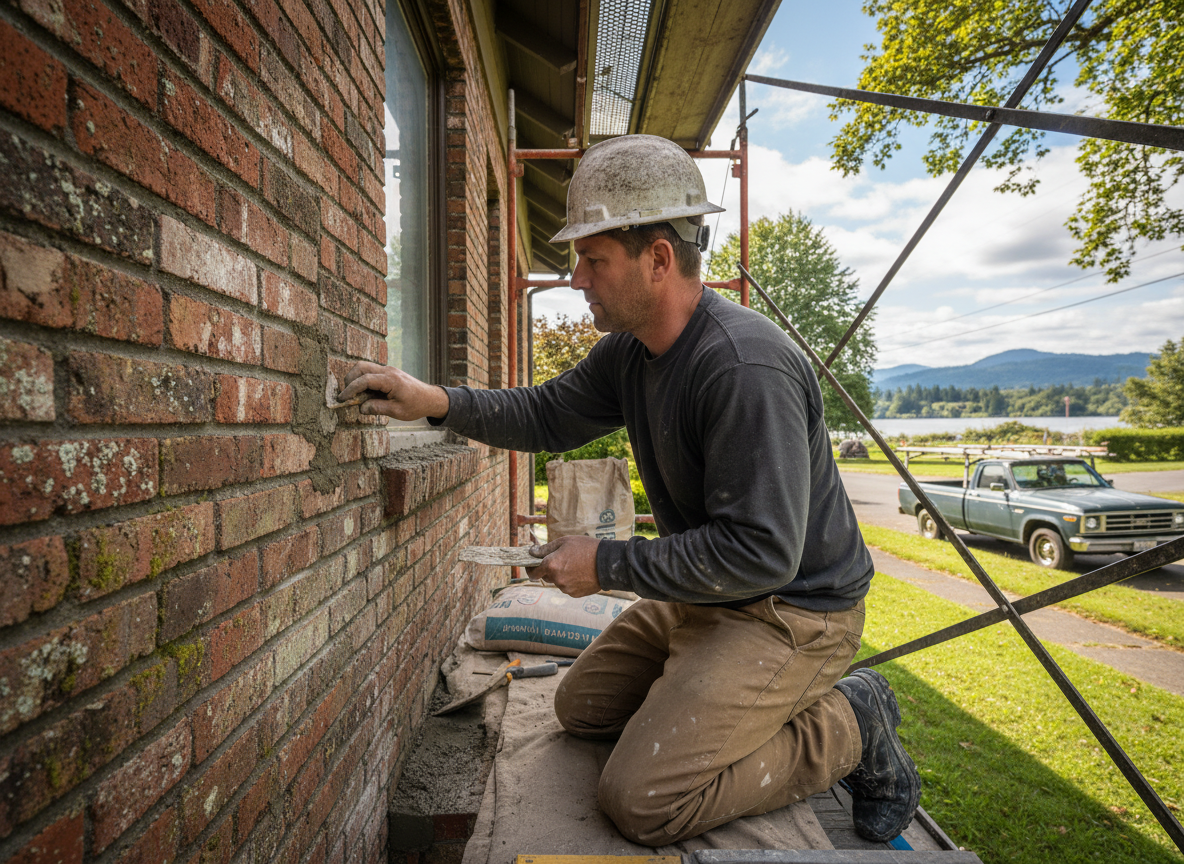
Fixing mortar joints on older homes in Clackamas County starts with identifying deteriorated joints and repointing them using lime-based mortar matched to the original mix, a process that typically takes 3–7 days for an average single-story house depending on wall length and access.
Assessing Mortar Condition in Milwaukie Homes
Homes built before 1950 in Downtown Milwaukie, Ardenwald, and Hector Campbell commonly feature soft lime mortar that erodes when exposed to the county's mild wet winters. Water from the Willamette River raises local humidity and drives moisture into joints, especially on north-facing walls and foundations near Island Station. Walk the perimeter after heavy rain and look for recessed joints deeper than 1/4 inch, crumbling material, or white efflorescence. Test by pressing a screwdriver into the joint; if it sinks easily the mortar has lost cohesion. Document cracks wider than 1/8 inch because these often indicate ongoing movement from seasonal soil expansion along the river corridor.
Choosing Compatible Mortar for Local Conditions
Portland cement mortars shrink and trap moisture against older brick in Clackamas County, so lime-based Type N or custom NHL 3.5 mixes are required to allow vapor transmission. In Milwaukie homes the original mortar usually contains high sand content and little cement, so a 1:3 lime-to-sand ratio replicates the breathability needed during warm dry summers when walls must dry out. Add a small amount of mineral pigment to match existing color before full batches are mixed. Avoid modern additives that reduce permeability because they accelerate spalling once winter rains return. Test patches on inconspicuous areas for two weeks to confirm color and hardness before proceeding across the full elevation.
Step-by-Step Repointing Process
Remove old mortar to a depth of 3/4 inch using a 1/4-inch chisel and hammer, working in small sections to avoid damaging brick edges. Clean joints with a stiff brush and low-pressure water, then allow surfaces to dry to damp rather than wet. Pack new mortar in layers no thicker than 1/4 inch, tooling each layer concave to shed water. Work from the top down on each wall to prevent staining from runoff. In neighborhoods near the river, schedule work during the drier months of July through September when temperatures stay above 50°F for proper curing. Protect fresh work with plastic sheeting if unexpected rain arrives.
Common Challenges in Clackamas County
Soil along the Willamette River holds moisture longer than upland areas, so foundation joints in Ardenwald and Island Station homes often fail first. Freeze-thaw cycles, though milder than eastern Oregon, still occur several times each winter and widen hairline cracks. Chimney stacks on older homes frequently show the worst deterioration because they receive direct rain and wind. Homeowners in Historic Milwaukie should coordinate with local guidelines before altering visible masonry. masonry restoration techniques preserve original brick while addressing these site-specific issues.
When to Call a Local Specialist
Large areas of missing mortar, bulging walls, or cracks running through multiple courses require assessment beyond basic repointing. Properties near the river may need additional masonry waterproofing after joints are repaired. For homes in Portland-adjacent sections of Clackamas County, matching historic profiles often involves historic masonry restoration methods. Review the article Choosing Stone That Holds Up in Oregon's Freeze-Thaw Cycles for guidance on related material choices.