2026-10-24 ·
Removing Moss From Stone Patios and Retaining Walls
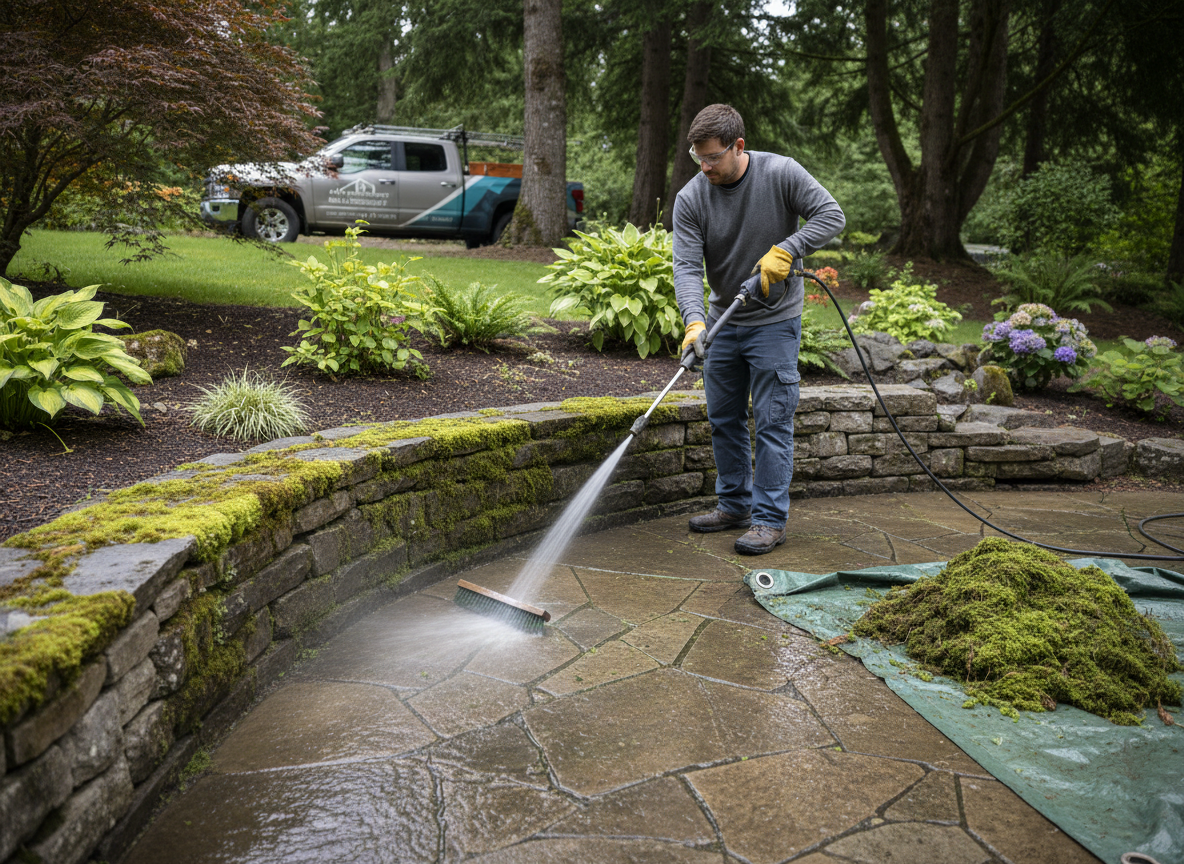
Moss on stone patios and retaining walls in Milwaukie responds best to a two-step process of scraping away growth then treating the surface with a mild alkaline solution that kills roots without etching the stone. Homeowners in Downtown Milwaukie and Ardenwald see this growth accelerate each fall once mild wet winters set in and moisture lingers near the Willamette River.
Why Moss Appears on Local Stone Surfaces
Stone patios and retaining walls in Clackamas County hold moisture longer than many expect because of the region’s mild wet winters and the shade cast by mature trees along streets in Island Station and Hector Campbell. Older homes built before 1960 often feature porous basalt or sandstone that traps organic debris washed down from nearby Portland slopes. Warm dry summers then bake the moss into a crust that cracks mortar joints if left alone. The same freeze-thaw cycles that stress stone also create micro-pits where spores settle, turning a small patch into full coverage within two seasons. Property owners notice the worst buildup on north-facing walls and low-lying patios that stay damp even after the rain stops.
Manual Removal Steps That Protect Stone
Begin by sweeping loose leaves and debris from the surface, then use a stiff nylon brush to dislodge the moss mat without gouging the stone. Work in sections no larger than 4 by 4 feet so you can rinse each area before the loosened material dries back onto adjacent stone. For stubborn patches on retaining walls, insert a plastic scraper at a low angle to lift the growth rather than digging into joints. Avoid metal tools that leave scratches visible once the surface dries. In neighborhoods near Milwaukie Riverfront Park, crews often collect the removed moss in buckets to keep it from washing into storm drains that feed the Willamette River.
Cleaning Solutions and Rinse Techniques
A 50-50 mix of water and oxygen bleach applied with a pump sprayer kills remaining roots within 48 hours without harming surrounding plants. Let the solution dwell, then rinse with a garden hose at low pressure to prevent driving water deep into mortar. For larger patios, a 40-gallon tank sprayer mounted on a hand truck lets one person cover 300 square feet before refilling. Never use pressure washers above 1,200 psi on older stone; the force erodes soft edges and forces water behind veneer. After rinsing, allow the surface to dry for three days before applying any sealer so trapped moisture can escape.
Long-Term Prevention in Clackamas County Weather
Reapply a copper-based moss preventative each spring before the first rains return, focusing on the lower third of retaining walls where splash-back from summer irrigation keeps stone damp. Improve drainage behind walls by clearing soil that has crept up over the years in Ardenwald yards. Homeowners who link new patios to existing stone patio contractors often request a slight pitch and wider weep holes that reduce standing water. Reading about Choosing Stone That Holds Up in Oregon's Freeze-Thaw Cycles helps when planning replacements. For walls showing joint damage from repeated moss cycles, masonry restoration crews can repoint before the next wet season arrives.
When Professional Help Makes Sense
If moss has penetrated more than 1/4 inch into mortar or the retaining wall shows outward lean, schedule an on-site assessment rather than continuing DIY treatments. Crews familiar with retaining wall contractor work in Historic Milwaukie can install proper footings and drainage while addressing the moss source. Properties along the river corridor sometimes require permits for any excavation near the bank, which a local crew handles directly. Addressing the issue early keeps repair costs between $400 and $1,200 for a typical 20-foot wall instead of full replacement later.